

Benefits of Remote Monitoring and Automated Follow-Up for Clinics

Fida Muhammad
Digital Marketing Expert
Published Nov 26, 2026
Updated Nov 26, 2026
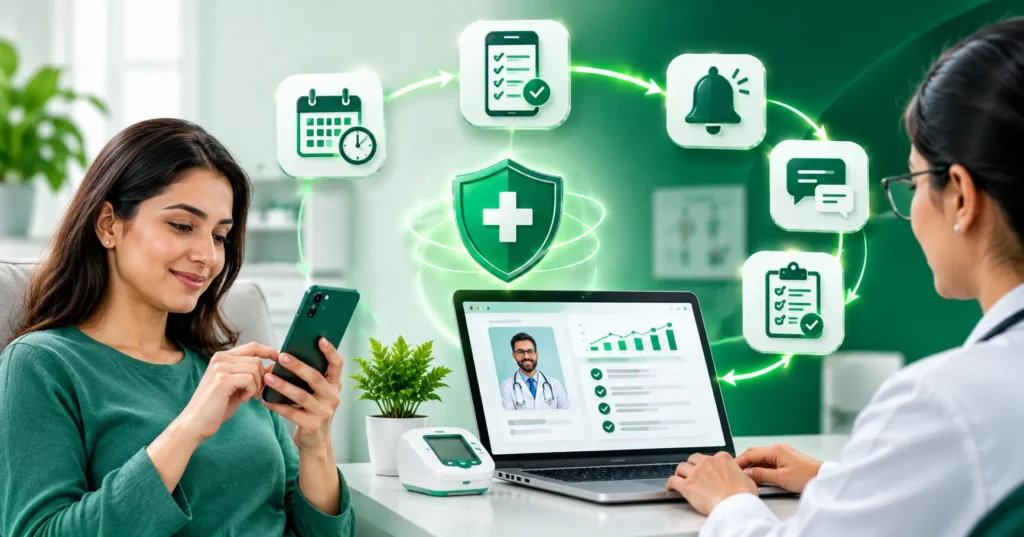
Clinics are being asked to do more with the same team. Patients expect quick answers, reminders that arrive on time, and a way to share updates between visits. Remote tools and automation can help, and the benefits of remote monitoring go beyond convenience when they are set up well.
This guide explains what remote monitoring and automated follow-up look like in a clinic, where automation helps most, and what to check on privacy and compliance before you start.
In a hurry? The short version:
- Remote monitoring lets clinics track patient updates between visits.
- Automated follow-up reduces manual reminders and missed tasks.
- Secure messaging and digital check-in save staff time when they are built with privacy in mind.
- Start with one workflow, measure the result, then expand.
What Is Remote Patient Monitoring?
Remote patient monitoring means collecting health information from patients outside the clinic and reviewing it with their care team. Depending on the program, that information may come from patient-reported questionnaires, connected devices, or simple check-ins. Clinical decisions remain with the treating clinician, and the tools exist to support that work.
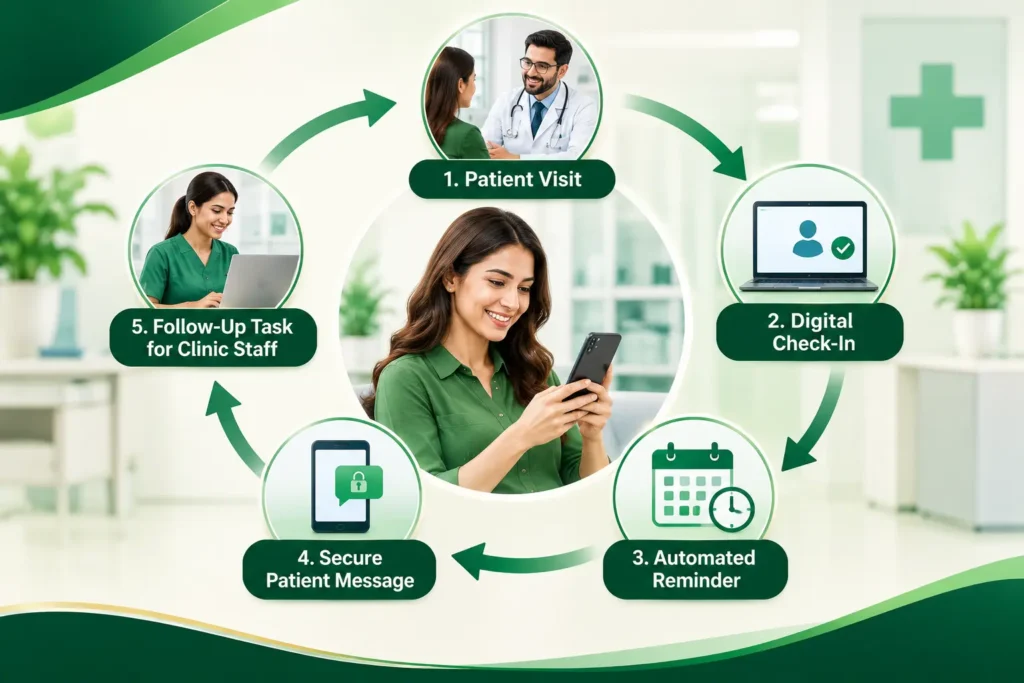
Automated follow-up adds structure around this. It sends reminders, collects responses, and creates tasks for staff so that nothing falls through the cracks between appointments.
Benefits of Remote Monitoring and Automated Follow-Up
- Fewer missed touchpoints. Scheduled reminders and check-ins help keep care plans on track between visits.
- Earlier awareness of changes. When patients report updates through a structured form, staff can see concerns sooner.
- Less manual work for staff. Automation handles repetitive reminders, so the team can focus on conversations that need judgment.
- Better patient communication. Patients get clear information at the right time, in a format they can use.
- Stronger continuity of care. Notes, tasks, and messages stay connected to the patient record, which helps any team member pick up the thread.
Benefits of RPA in Healthcare
Robotic process automation, or RPA, uses software to carry out repetitive administrative steps the way a person would. In a clinic, that might mean moving data between systems, filing forms, sending standard letters, or checking whether a referral is complete.
The benefits of RPA in healthcare are practical. Fewer manual handoffs mean fewer data entry errors, faster processing, and staff hours freed for patient care. RPA works best on rule-based tasks with clear steps. It is less suited to decisions that need clinical judgment.
Intelligent Automation in Healthcare for Practices
Intelligent automation combines RPA with tools that can read documents, sort requests, or flag unusual patterns. For smaller practices, the most useful version is often simple: automatic routing of messages, reminders tied to appointment changes, and task lists created from patient responses.
Start with the tasks that consume the most staff time and carry the least risk. Once those run smoothly, consider adding more advanced features.
Process automation in healthcare works best when each step has an owner and a clear outcome. Map the current workflow first, then remove steps that exist only because the old system required them.
Automating the Patient Check In System
A patient check in system lets people complete forms, confirm insurance details, and update contact information before they arrive. This shortens waiting-room lines and reduces the data entry that front-desk staff must repeat.
A modern patient check-in system should also support walk-ins and patients who prefer to check in at the desk. Automation should make the process easier for everyone, not only for the people who use a phone.
Healthcare Messaging Automation
A patient check in system lets people complete forms, confirm insurance details, and update contact information before they arrive. This shortens waiting-room lines and reduces the data entry that front-desk staff must repeat.
A modern patient check-in system should also support walk-ins and patients who prefer to check in at the desk. Automation should make the process easier for everyone, not only for the people who use a phone.
Many buyers type seo company america into search, which returns a mix of agencies, freelancers, and software platforms. Narrow the list by national experience, case studies from businesses like yours, and clear reporting. Whether you search for seo optimisation companies or SEO firms, the same checklist applies.
SEO Companies in America
Agencies across America differ in size and specialty. Some serve only a few industries, while others handle everything from technical audits to content. A seo company in america with national case studies is usually a safer bet than one that only shows local wins.
Top SEO Companies in US
Lists of the top SEO companies in US often rank firms by marketing spend or advertising presence. Use them as a starting shortlist, then verify each firm through references, reviews, and sample audits.
International SEO Companies
International SEO companies handle multiple countries and languages, which national-only firms may not. Choose one only if you sell beyond your borders. For a single-country plan, a national specialist is often the better fit.
Global SEO Companies
Global SEO companies usually have teams in several regions and work with large brands. They can be a strong choice for big budgets, but confirm who will do the daily work and how many clients each team member manages.
Top SEO Companies in the World
Rankings of the top SEO companies in the world often focus on size and reputation. Some lists also rank the top seo companies in world by revenue, which says more about size than service. Size helps, but fit matters more. A firm that knows your industry and your country will usually deliver faster results than a famous name with no experience in your market.
The top international seo companies are worth comparing if your plan includes several countries. Ask each one for a plan that explains how it adapts content and links for each market.
Secure Messaging for Healthcare Follow-Ups
Follow-up often requires a conversation, and that conversation may include personal health information. Secure messaging for healthcare uses encrypted channels and access controls so that only the intended people can read the content.
Secure texting for healthcare is useful for reminders and general updates, but it should not carry sensitive detail unless the platform and the messaging rules allow it. A short text that asks the patient to log in to a secure portal is often the safest approach.
Secure text messaging healthcare teams can use should be checked against your privacy obligations before rollout. Confirm where messages are stored, who can access them, and how long they are kept.
Healthcare secure messaging tools should also keep a clear audit trail. When staff reply, the system should show who wrote the message and when.
Examples of RPA in Healthcare
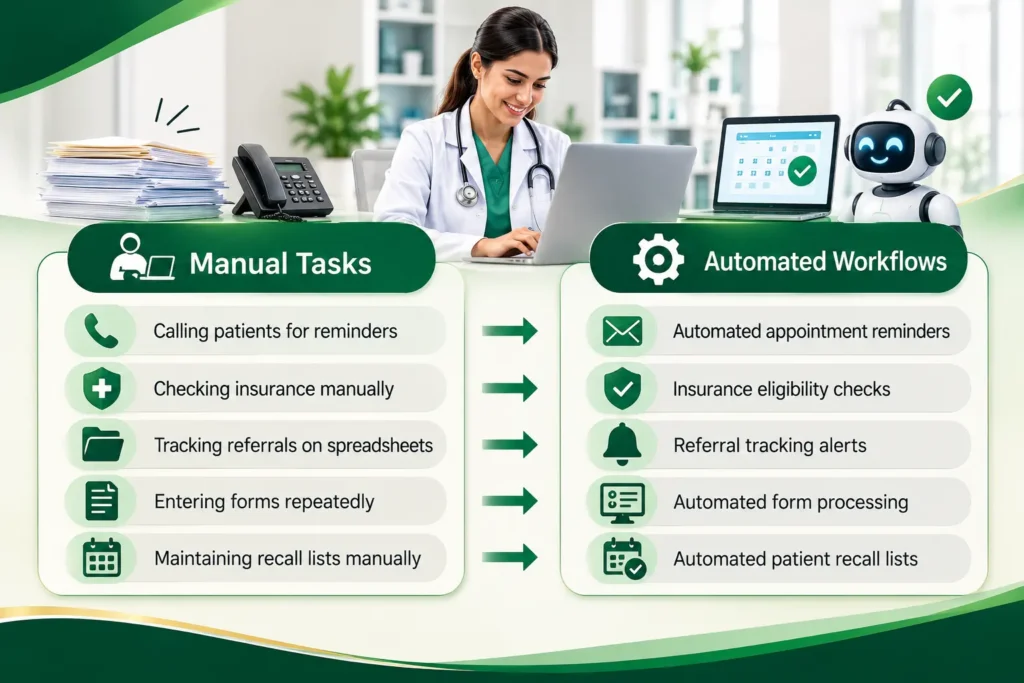
Here are a few common examples clinics use or consider:
- Appointment reminders that adjust when a schedule changes
- Insurance eligibility checks that run before a visit rather than at the desk
- Referral tracking that flags incomplete paperwork for staff
- Form processing that moves patient-submitted information into the right record
- Recall lists that identify patients due for routine follow-up
Each example should be tested with a small group before it is rolled out across the practice.
Choosing an Automated Remote Patient Monitoring Platform
When you evaluate an automated remote patient monitoring platform, start with the workflow you need to support. Ask how patient data is stored, how alerts are routed to staff, and how the platform connects to your scheduling and records systems.
Look for clear limits on what the platform does and does not do. A remote monitoring tool should support your clinicians, not replace the clinical judgment that guides care.
Patient Management Solutions
Patient management solutions bring scheduling, check-in, messaging, billing, and records into one place. Integrated systems reduce duplicate entry, but they also concentrate risk, so review security and vendor support carefully.
Smaller clinics often do well with a focused set of tools that work together. Larger groups may need a broader platform with stronger reporting and role-based access.
Compliance and Privacy Considerations
Any tool that collects or sends patient information must follow the privacy and security rules that apply where your clinic operates. Confirm requirements with your compliance advisor or legal counsel before you launch. I am not a lawyer, and the rules vary by location and by the type of service.
At a minimum, plan for encrypted transmission, access controls, staff training, and a clear policy for what can and cannot be sent by text or email.
FAQ
A patient check-in procedure is the set of steps a clinic uses to welcome patients, confirm their details, collect forms, and record that they have arrived. Digital check-in replaces some or all of those steps with online forms, text links, or kiosks, which can reduce waiting and paperwork.
No. Remote monitoring supplements care between visits. Clinicians still decide when an in-person visit is needed, and patients should contact the clinic or emergency services directly when they have urgent concerns.
Not always. Some patients prefer phone calls, have limited access to devices, or need more support. Offer alternatives and let patients choose how they want to be contacted.
Start with one high-volume, low-risk workflow, such as appointment reminders or digital check-in. Measure staff time saved, patient response, and errors before adding the next workflow.
Yes, and it is often a strong fit. Online stores can reach buyers anywhere, so category pages, product guides, and comparison content can attract nationwide demand.
Final Thoughts
Remote monitoring and automated follow-up can help clinics stay connected with patients without adding to staff workload. The best results come from careful workflow design, secure communication, and a clear plan for privacy and compliance.
If you are planning a digital patient experience for your clinic, I can help. I map workflows, compare tools, and build websites and forms that make check-in and follow-up easier for patients.
- On this page
A clearer budget. A better store.
Ready to reach customers beyond your city? Get in touch for a free national SEO review.
Want to see the work behind this? Browse my portfolio for national SEO projects.
- Free consultation and tailored quote
Fida Muhammad
Digital marketing expert and partner in business growth. I help businesses turn websites into measurable results through SEO, strategy, and conversion-focused design.
Let's build something that sells
Ready to plan your clinic's digital follow-up? Get in touch for a free consultation.
Want to see the work behind this? Browse my portfolio for healthcare projects.
